Pupil Field & Wavefront
Script: 5_pupil_field.py
Compute the exit-pupil field (complex wavefront) of a refractive lens for a point object by coherent ray tracing, and compare PSFs computed by different models. Unlike commercial tools that interpolate a low-frequency wavefront, DeepLens computes the wavefront directly, so it stays accurate for high-frequency aberration. From the differentiable ray–wave model (SIGGRAPH Asia 2024).
What it demonstrates
- Extracting the exit-pupil amplitude and phase (wavefront) via coherent ray tracing.
- Comparing the PSF from the ray–wave (coherent), incoherent ray-traced, and Huygens models, including a center-line cross-section.
Run
Key code
from deeplens import GeoLens

lens = GeoLens(filename="./datasets/lenses/cellphone/cellphone68deg.json")
lens.set_sensor_res((8000, 8000))

wavefront, _ = lens.pupil_field(points=point, spp=20_000_000)
save_image(wavefront.angle(), "./wavefront_phase.png")  # phase
save_image(torch.abs(wavefront), "./wavefront_amp.png") # amplitude
Note
The figures below were generated with reduced sampling (spp, sensor
resolution) for documentation speed; the committed script uses the full
high-resolution settings.
Results
| Wavefront phase | Wavefront amplitude |
|---|---|
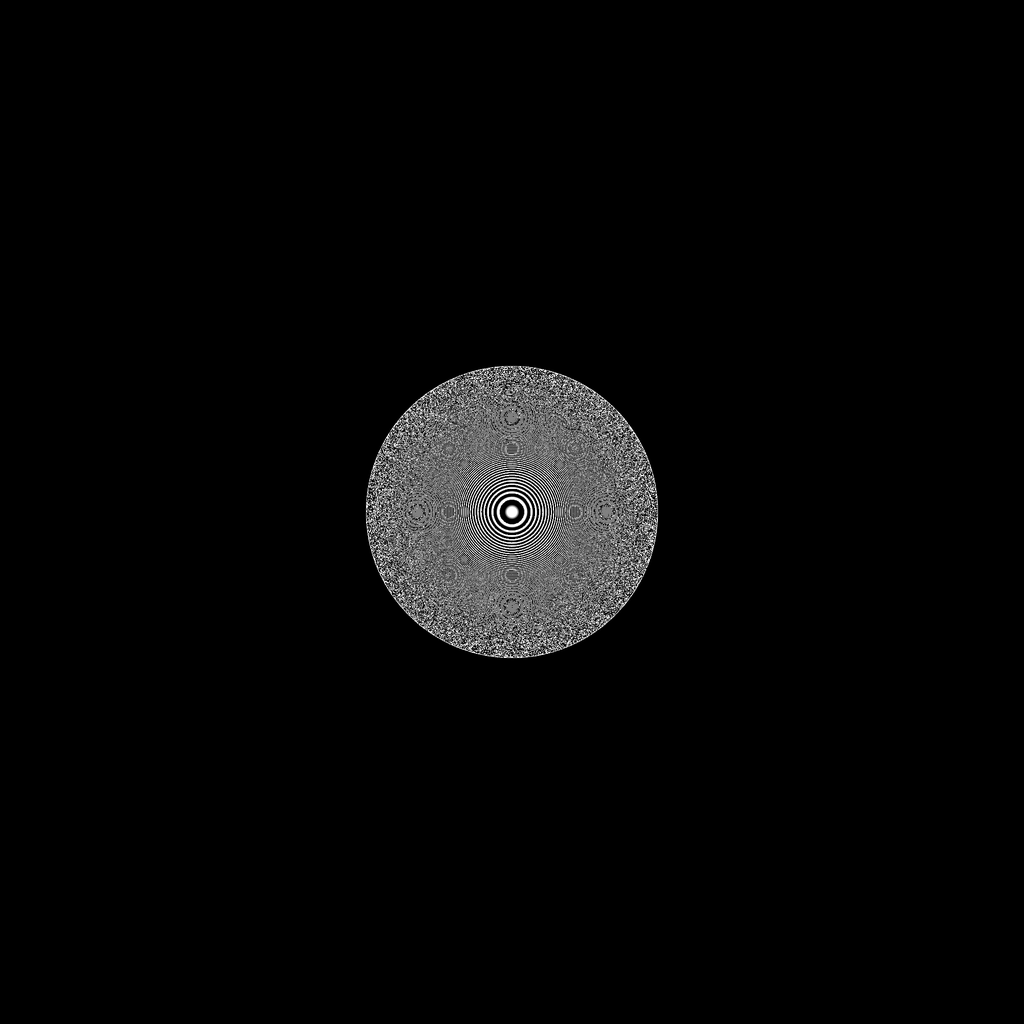 |
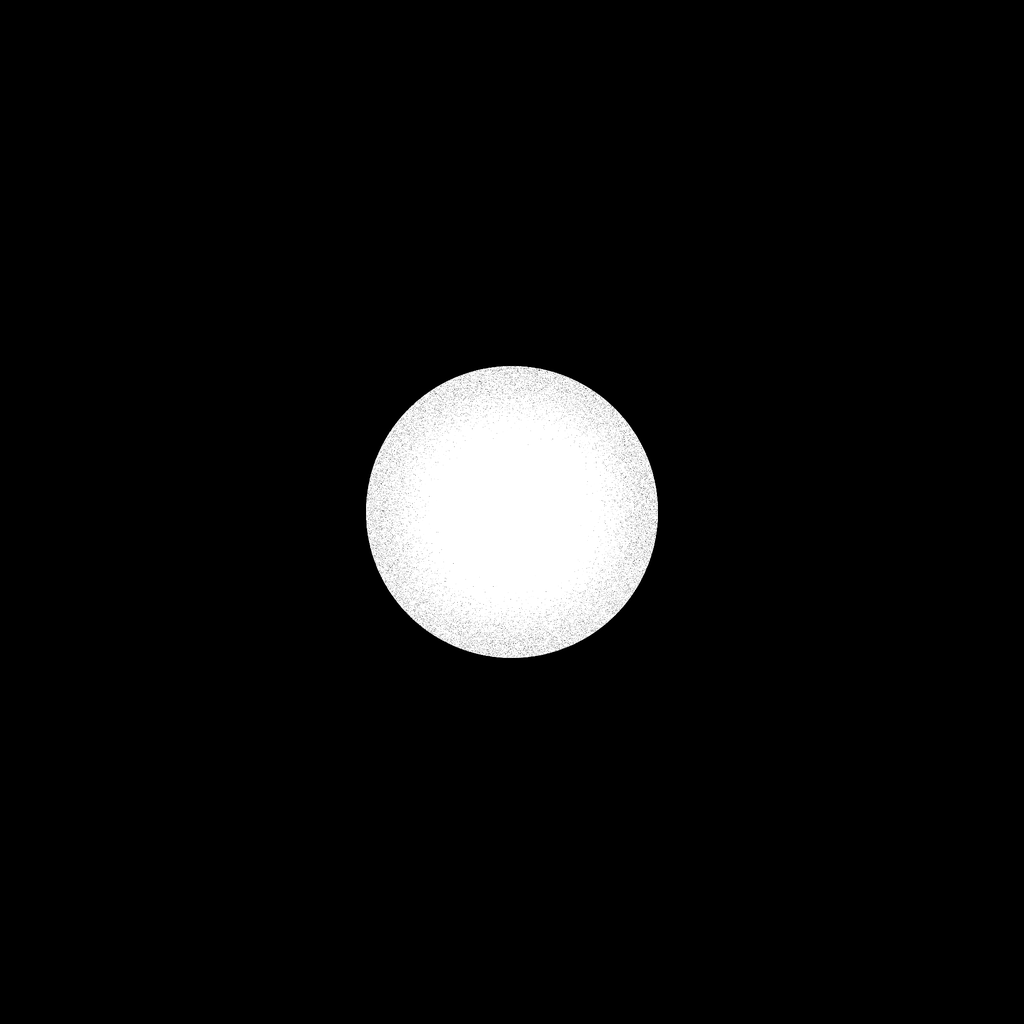 |
| Ray–wave PSF | Model comparison (center line) |
|---|---|
 |
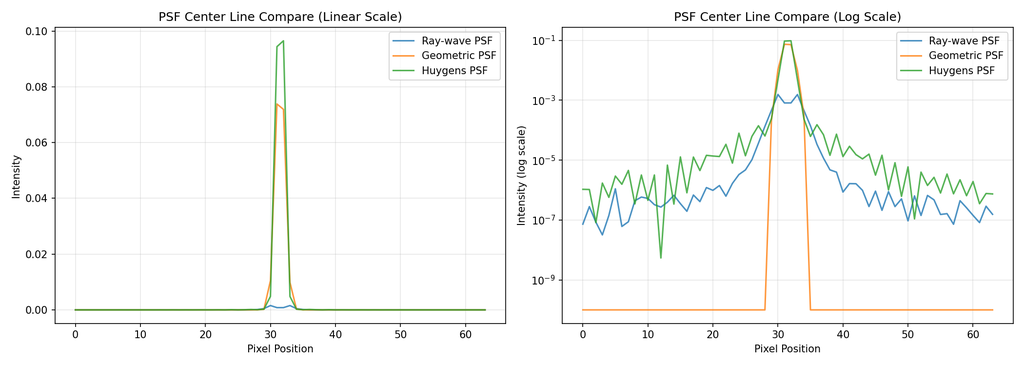 |
See also
- HybridLens design · API:
ComplexWave