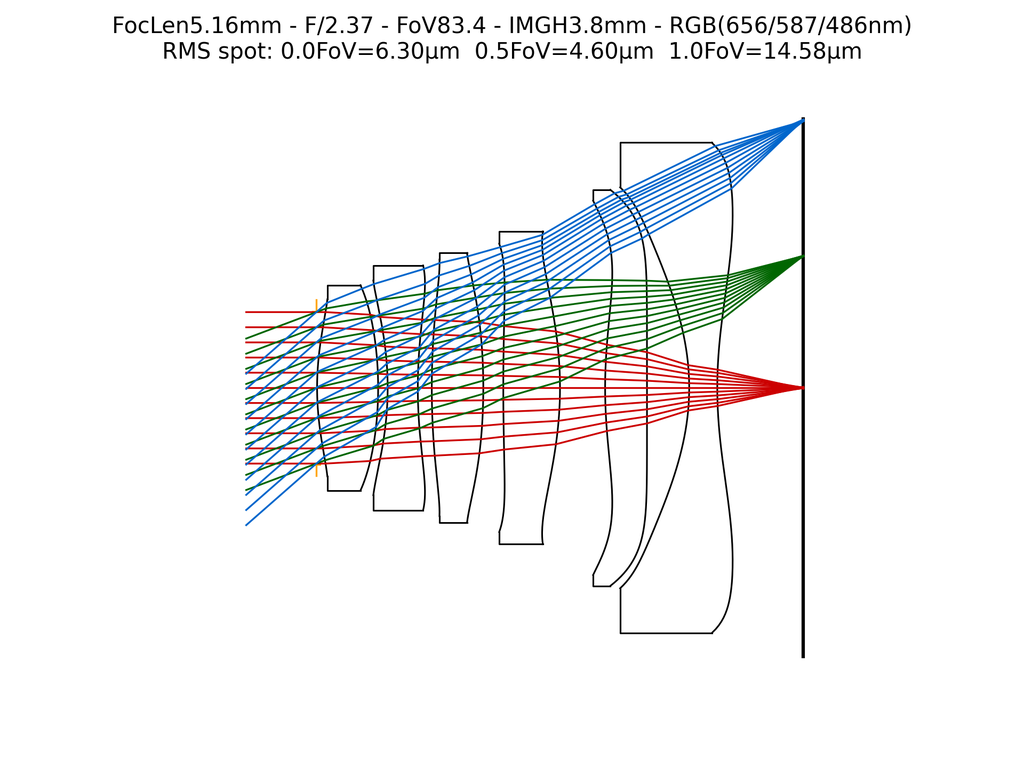
GeoLens Design
Script: 1_design_geolens.py
Optimize a refractive lens by gradient descent on its surface parameters using the built-in curriculum loop, with an RMS-spot objective and manufacturability regularizers.
What it demonstrates
- Loading a starting lens and running
lens.optimize(...)(curriculum learning). - Comparing the optical analysis before and after optimization.
Run
Key code
from deeplens import GeoLens

lens = GeoLens(filename="./datasets/lenses/cellphone/cellphone80deg.json")
lens.analysis(save_name=f"{result_dir}/initial")

lens.optimize(
    lrs=[1e-3, 1e-4, 1e-1, 1e-4],
    iterations=10000,
    test_per_iter=100,
    sample_more_off_axis=True,
    result_dir=result_dir,
)

lens.write_lens_json(f"{result_dir}/final_lens.json")
lens.analysis(save_name=f"{result_dir}/final_lens")
Results
The figure below is the starting-point analysis produced before the
optimization loop (the design loop itself is skipped in this documentation run).
Running the full script optimizes the surfaces and writes the corresponding
final_lens analysis.